Health and Safety Policy for Landscaping Croydon
 This health and safety policy for landscaping Croydon sets out the standards, responsibilities, and working practices needed to protect staff, clients, visitors, and the wider public during landscaping activities. It applies to routine grounds work, planting, maintenance, excavation, paving, turfing, tree-related tasks, and the use of machinery and tools. Our aim is to create a safe, organised, and well-managed working environment where risks are identified early and controlled effectively.
Landscaping often involves a changing environment, with hazards that can appear quickly as work progresses. Uneven ground, hidden objects, moving vehicles, noise, manual handling, falling materials, weather changes, and powered equipment all require careful attention. This landscaping health and safety policy is based on the principle that safety is everyone’s responsibility and that no task is so urgent that it should be done recklessly.
 All employees, subcontractors, and supervisors are expected to follow this policy at all times. Before work begins, a suitable risk assessment must be completed and reviewed whenever conditions change. For Croydon landscaping projects, this means considering site access, ground conditions, overhead hazards, underground services, pedestrian movement, and any nearby occupied areas. Clear planning prevents avoidable incidents and helps the team work efficiently.
Management will provide safe systems of work, appropriate training, and supervision proportionate to the task. Workers must be competent in the equipment they use and understand the limits of their own authority. If a job appears unsafe, it must be stopped and reported immediately. A strong landscape safety policy depends on open communication, good judgement, and prompt action when something does not look right.
Personal protective equipment will be supplied where needed and must be worn correctly. Depending on the task, this may include gloves, safety boots, eye protection, high-visibility clothing, hearing protection, or respiratory protection. PPE is the final line of defence, not a substitute for proper controls. A safe landscaping operation starts with planning, safe equipment selection, and careful work methods, not with relying on protective gear alone.
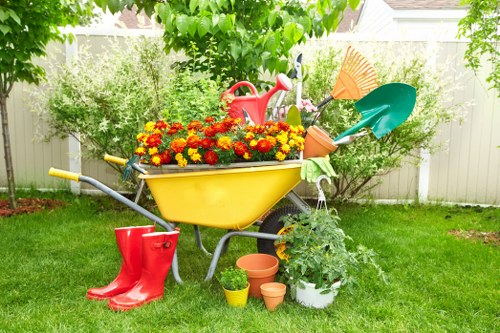 Manual handling is a significant concern in landscaping because materials such as soil, paving, timber, plants, and waste can be heavy, awkward, or unstable. Staff should use mechanical aids where possible and split loads into manageable sections. Team lifting should be organised when needed. Good posture, appropriate footwear, and keeping routes clear are essential parts of a practical landscaping health and safety approach.
Tools and machinery must be inspected before use and maintained in safe working order. Damaged equipment must be removed from service until repaired or replaced. Guards, switches, blades, cables, and fuel systems should all be checked. Only trained and authorised personnel may operate machinery such as hedge trimmers, mowers, compactors, saws, or diggers. This reduces the risk of injury and supports a landscaping safety policy built on competence and control.
Work areas should be kept tidy throughout the day to reduce slips, trips, and falls. Waste materials, offcuts, trailing cables, and loose tools must not be left in walkways. Where work affects public areas, barriers, signage, and supervision may be required to separate people from hazards. In a busy environment, housekeeping is a safety measure as important as any tool or procedure.
Weather can have a direct impact on landscaping safety. Rain, frost, strong winds, heat, and poor visibility may make tasks more hazardous and require a change in method or timing. Hot conditions can create dehydration and fatigue, while cold weather can reduce grip and concentration. Supervisors should monitor conditions and adjust work accordingly, especially when using machinery or handling materials outdoors.
 Chemical products such as fertilisers, herbicides, fuels, and cleaning agents must be stored, labelled, and handled carefully. Safety data should be available, and workers should be trained to follow manufacturer instructions. Spill kits and first-aid arrangements should be in place where relevant. Good control of substances is an important part of landscaping health and safety policy implementation.
Emergency procedures must be understood by everyone on site. This includes the response to injury, fire, chemical exposure, equipment failure, or an unexpected hazard such as damaged underground services. First aid provision should be suitable for the workforce and the nature of the work. Any accident, near miss, or unsafe condition must be reported, recorded, and investigated so that lessons can be learned and improvements made.
Training and supervision are central to maintaining a safe landscaping workplace. New starters and temporary workers should receive induction information before beginning work, and refresher training should be provided when methods, equipment, or risks change. Supervisors must monitor standards and correct unsafe behaviour promptly. Consistent training helps build confidence, improves awareness, and supports reliable performance.
The policy will be reviewed regularly to make sure it remains effective, current, and suitable for the work being carried out. Reviews should consider incident trends, changes in equipment, new materials, workforce feedback, and any updated working methods. A strong policy is not just a document; it is a working commitment to responsible practice across every landscaping task.
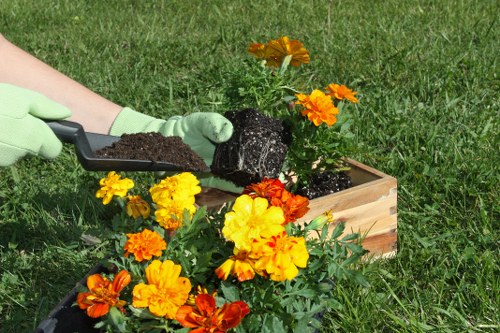 By following this health and safety policy for landscaping Croydon, the business demonstrates a clear commitment to safe working, legal compliance, and professional standards. Everyone involved in landscaping work is expected to contribute to a culture where hazards are reported early, risks are controlled sensibly, and safety is built into every stage of the job. This is the foundation of dependable, high-quality landscaping work.